

Call of Duty: Modern Warfare 4 has just been released. And since I had pre-ordered it, I was able to benchmark its single-player campaign so that I could provide you with a day-1 PC Performance Analysis. So, let’s dive in.
For our benchmarks, I used an AMD Ryzen 9 7950X3D, 32GB of DDR5 at 6000Mhz, AMD’s Radeon RX 6900XT, RX 7900XTX, RX 9070XT, as well as NVIDIA’s RTX 2080Ti, RTX 3080, RTX 4090, RTX 5080, and RTX 5090. I also used Windows 10 64-bit, as well as the GeForce 621.01 and the Radeon Adrenalin Edition 26.10.1 drivers.
Beenox has added a lot of graphics settings to the game. PC gamers can adjust a lot of settings. The PC version has support for all PC upscalers. It also supports Ray Tracing. However, Beenox has made some awkward choices when it comes to Ray Tracing.
For some odd reason, the game disables all PC upscalers when you enable Ray Tracing. As such, you can only use the default in-game render scale resolution. Moreover, the game will force Variable Rate Shading when you enable Ray Tracing or DLSS/FSR/XeSS. Again, I don’t know why the devs decided to force something like that.
Speaking of Ray Tracing, here are some comparison shots. On the left, we have the shots with Ray Tracing. On the right, we have those without Ray Tracing. As you will see, there are scenes in which Ray Tracing can noticeably improve the game’s visuals. However, there are also scenes that look almost identical.
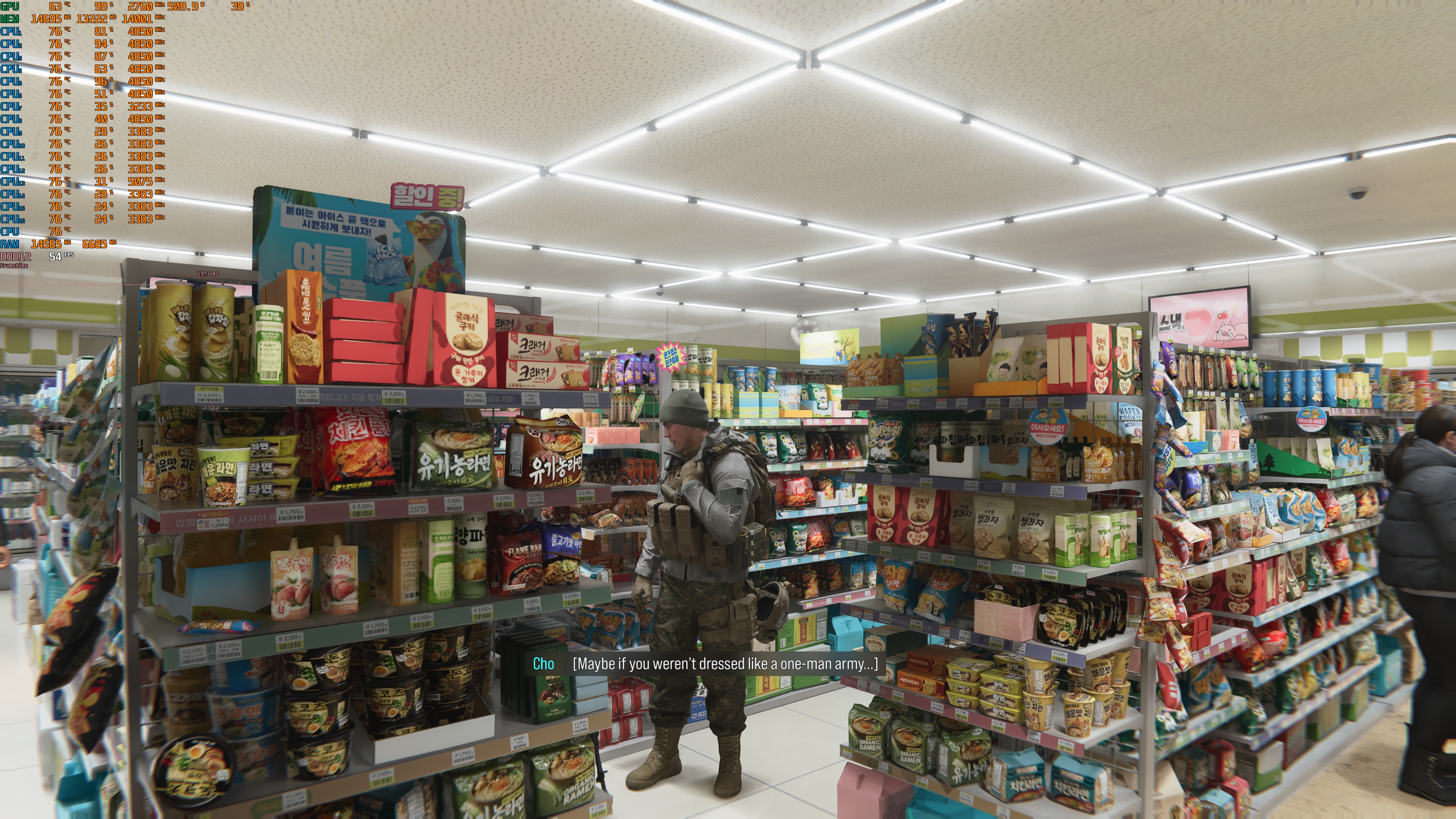





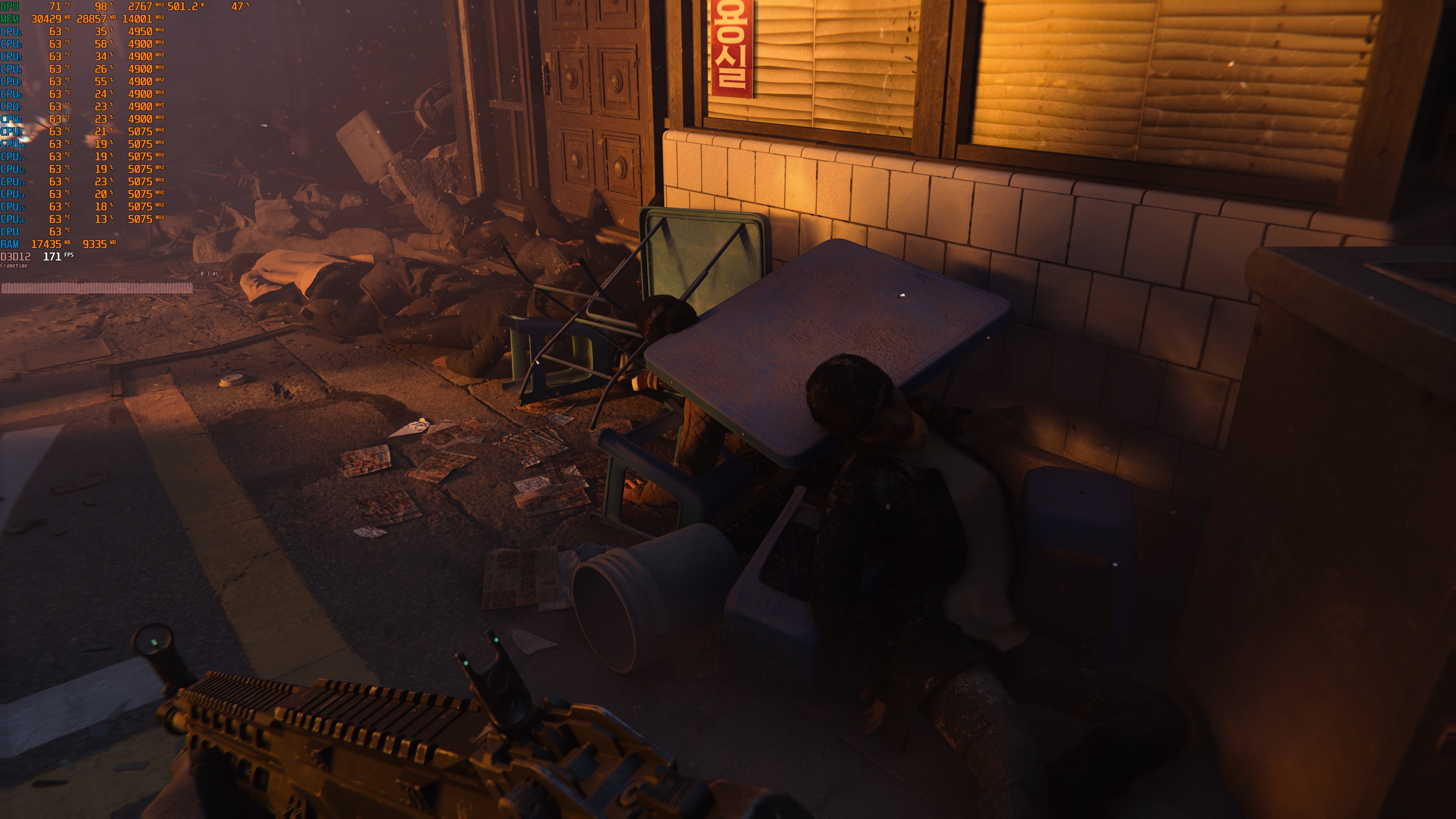
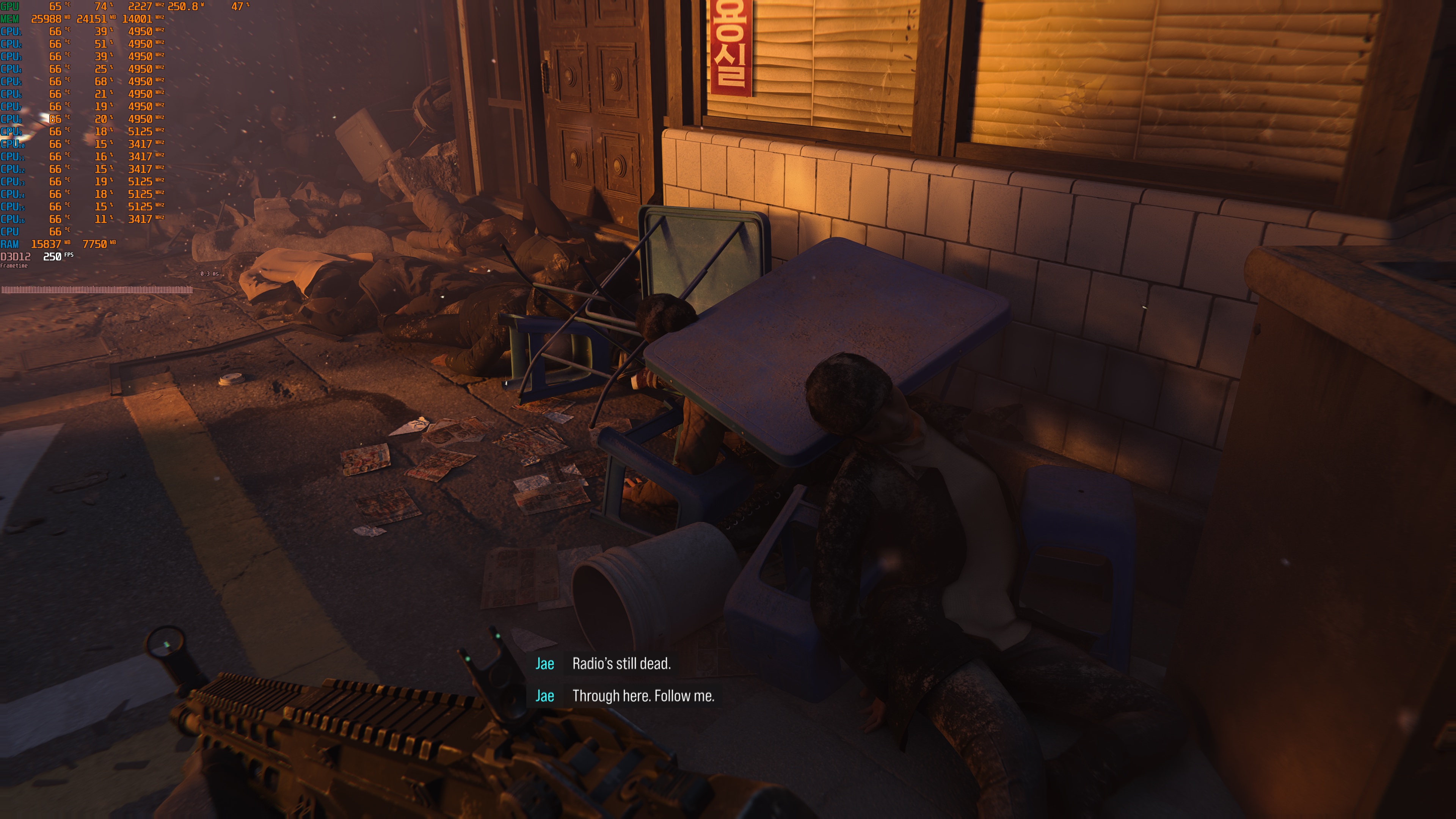
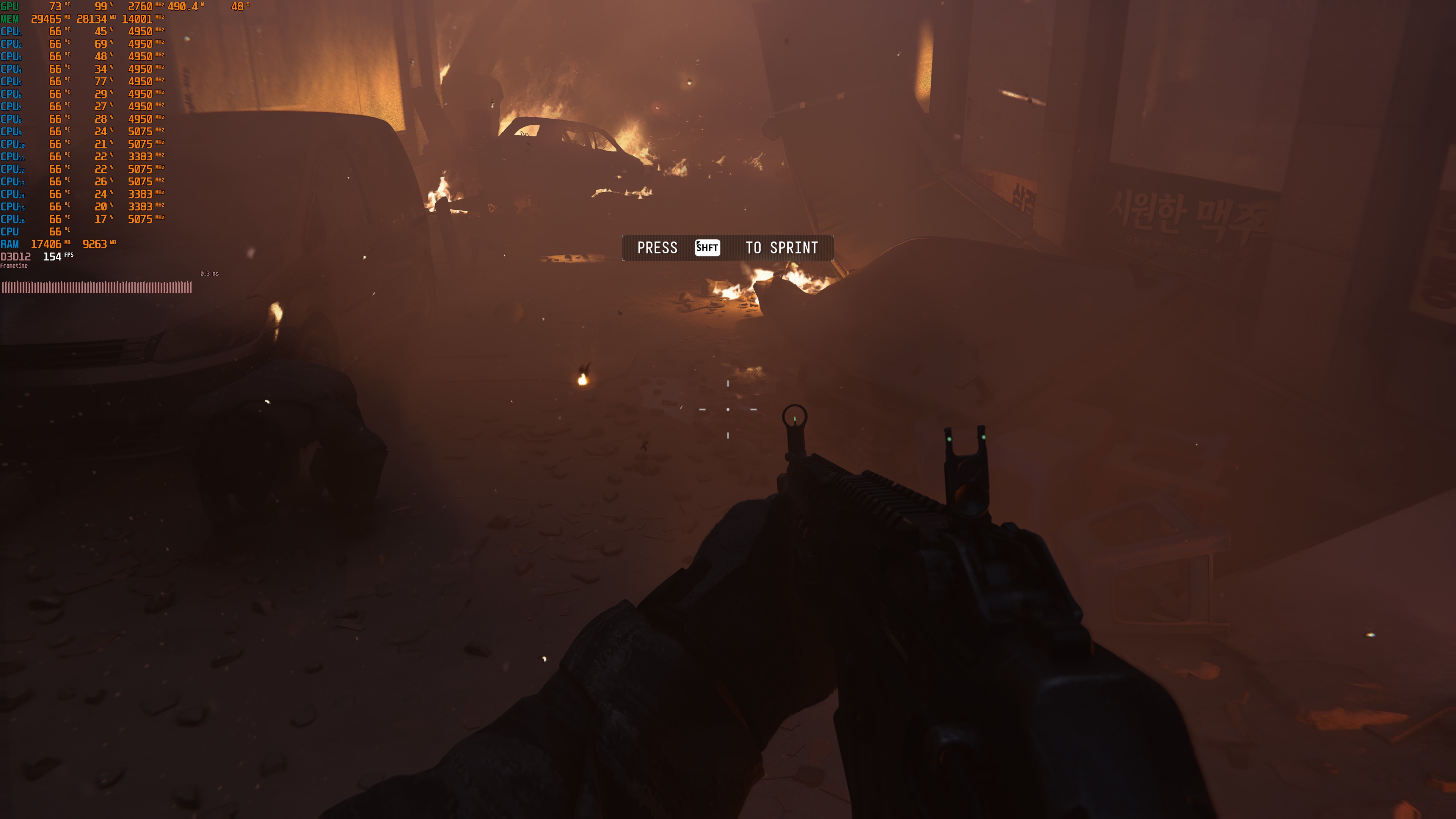
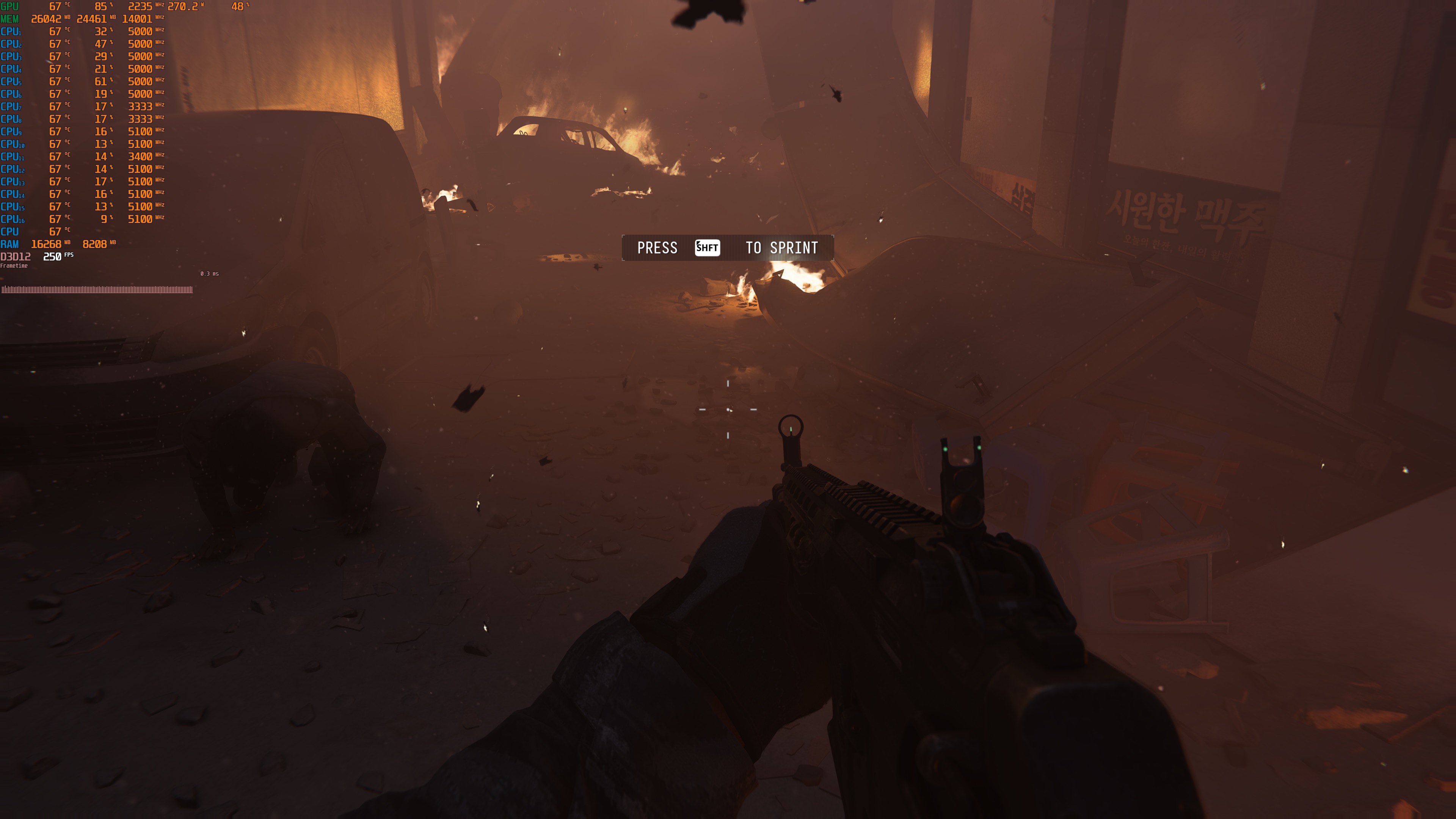
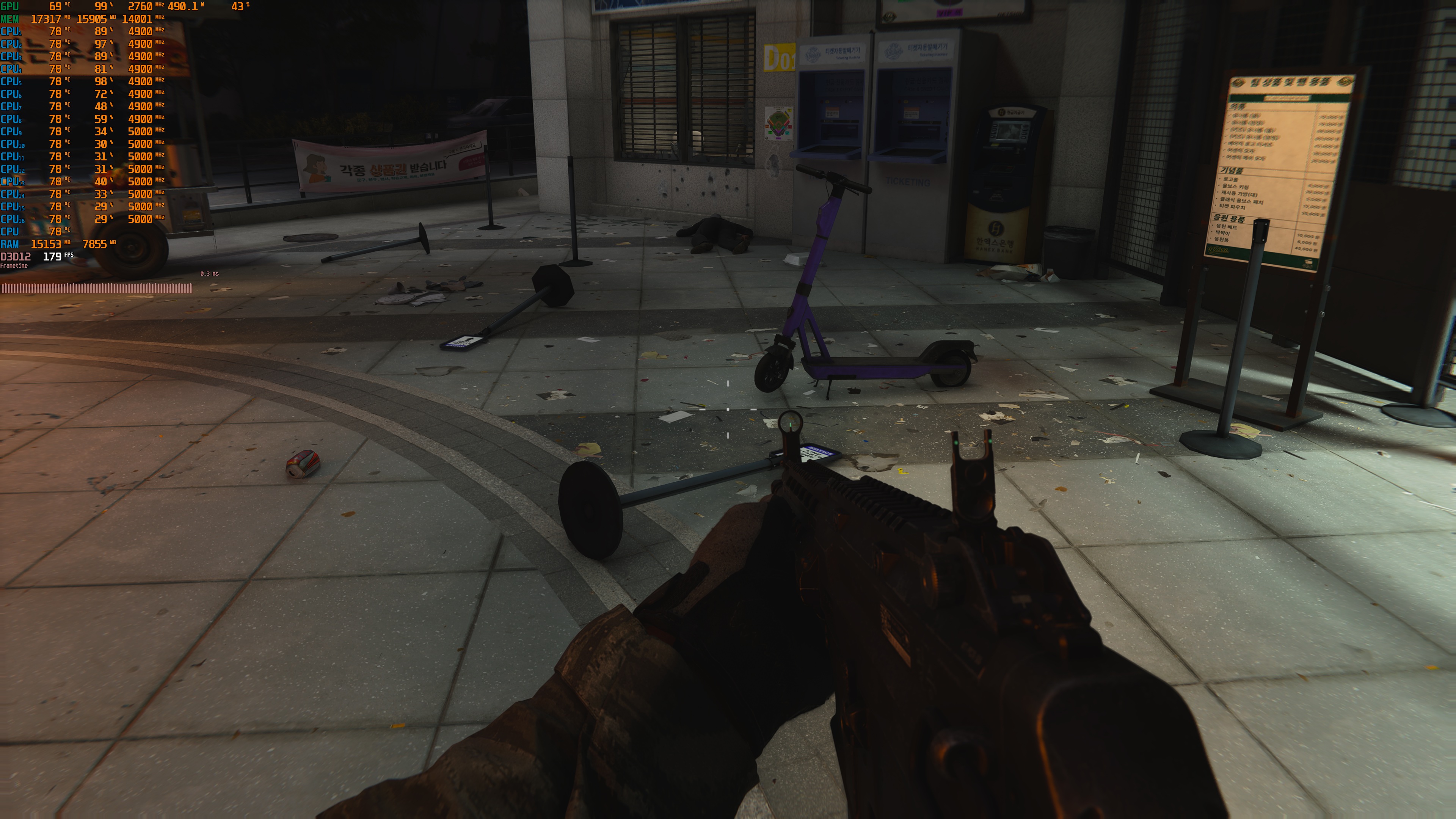
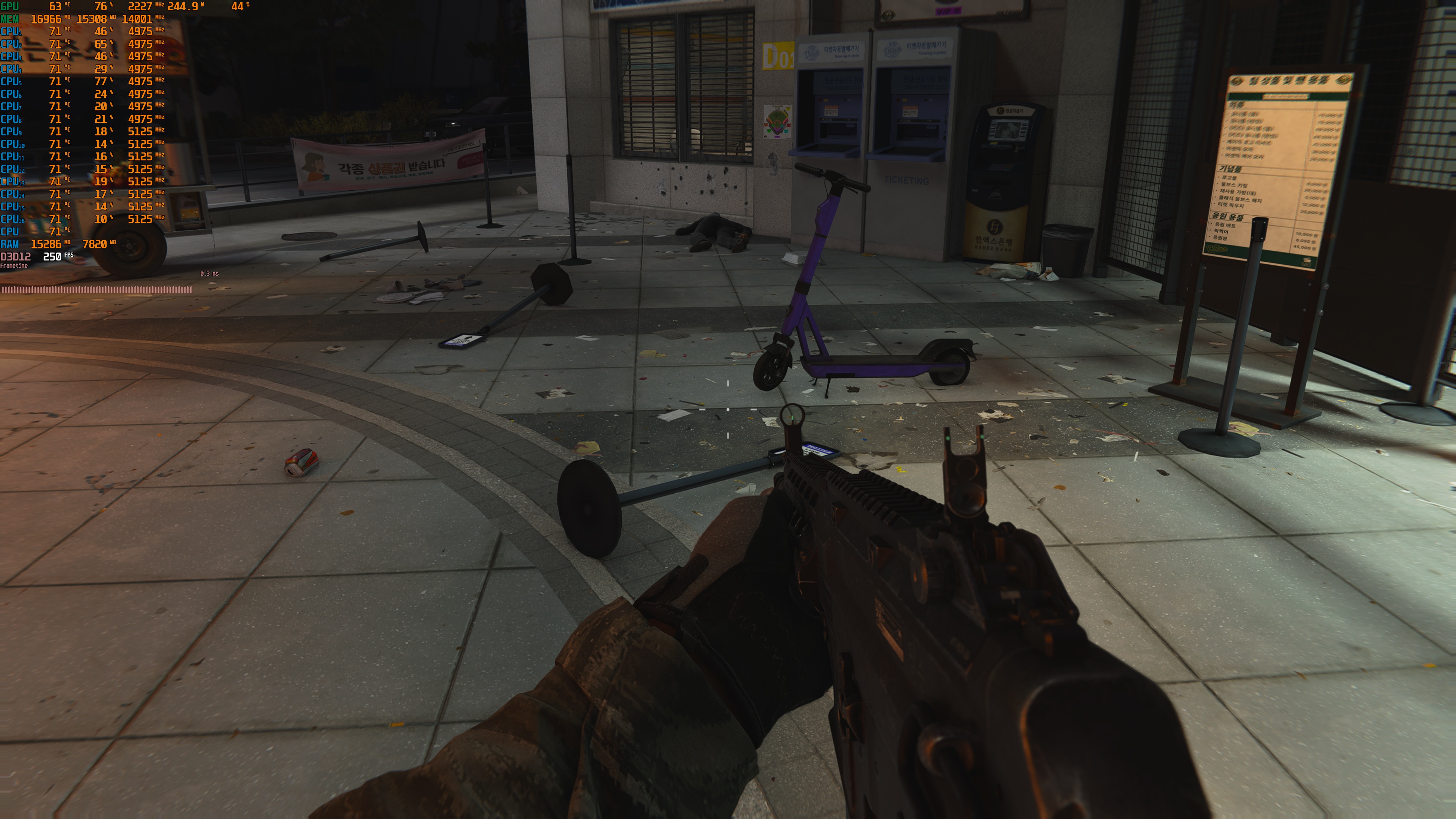
With Ray Tracing, image quality stays more consistent throughout the game. Without it, the image quality can vary a lot. At times, the game looks much worse. At other times, it looks almost as good as the ray-traced version. So, if you have the horsepower to run it with Ray Tracing, you should enable it. If not, you can skip it. Even without RT, Call of Duty: Modern Warfare 4 looks amazing.
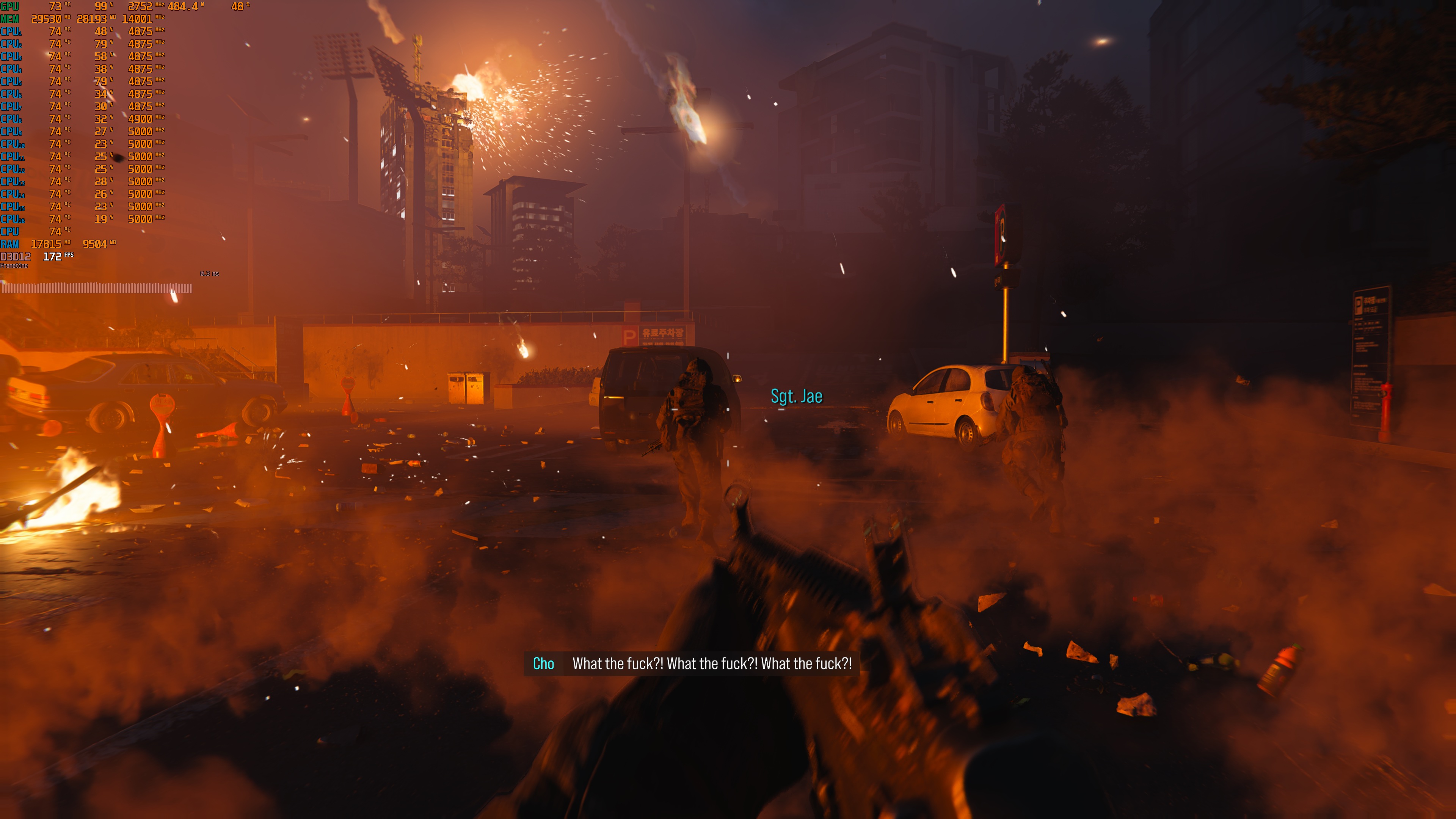
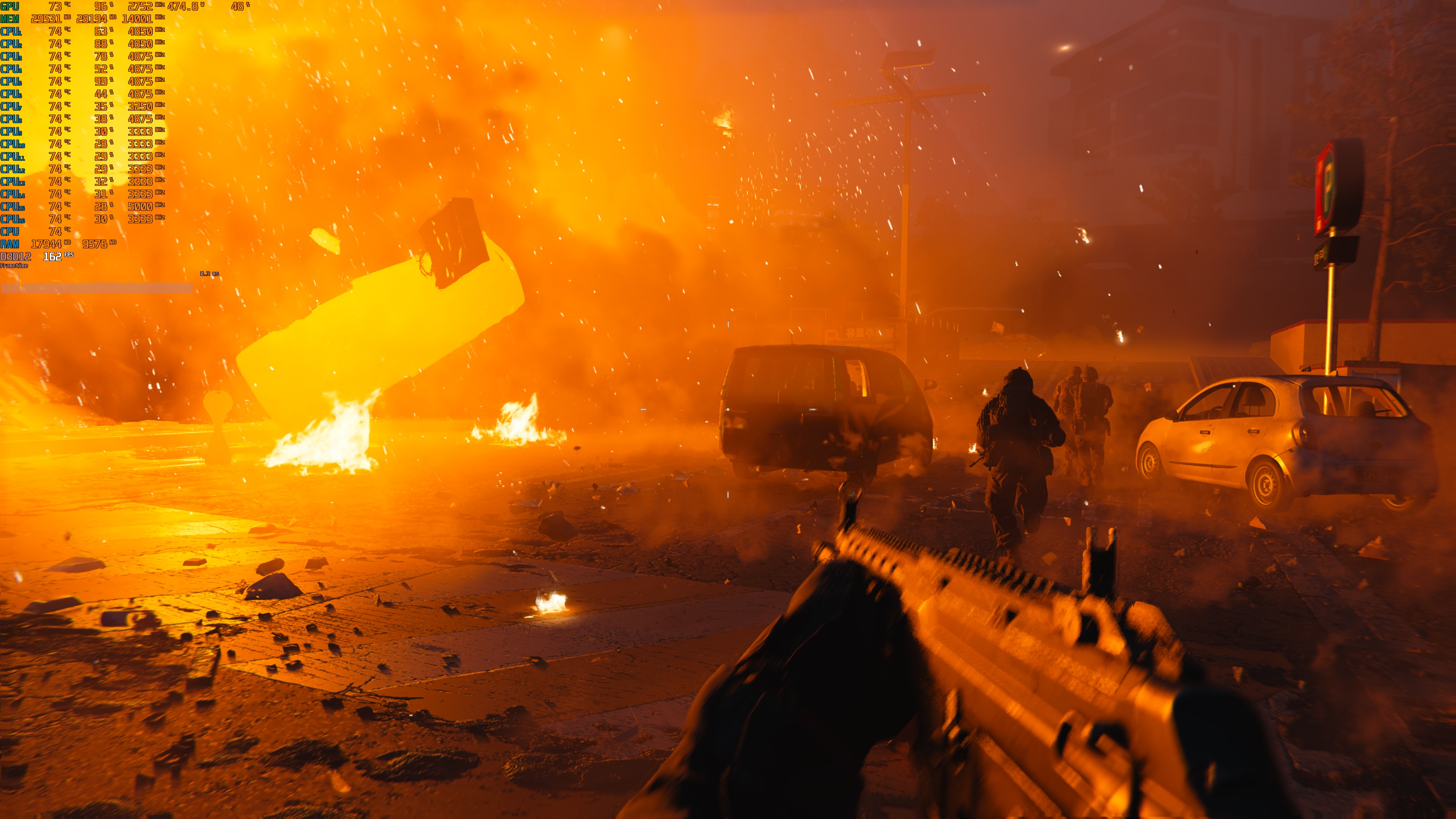
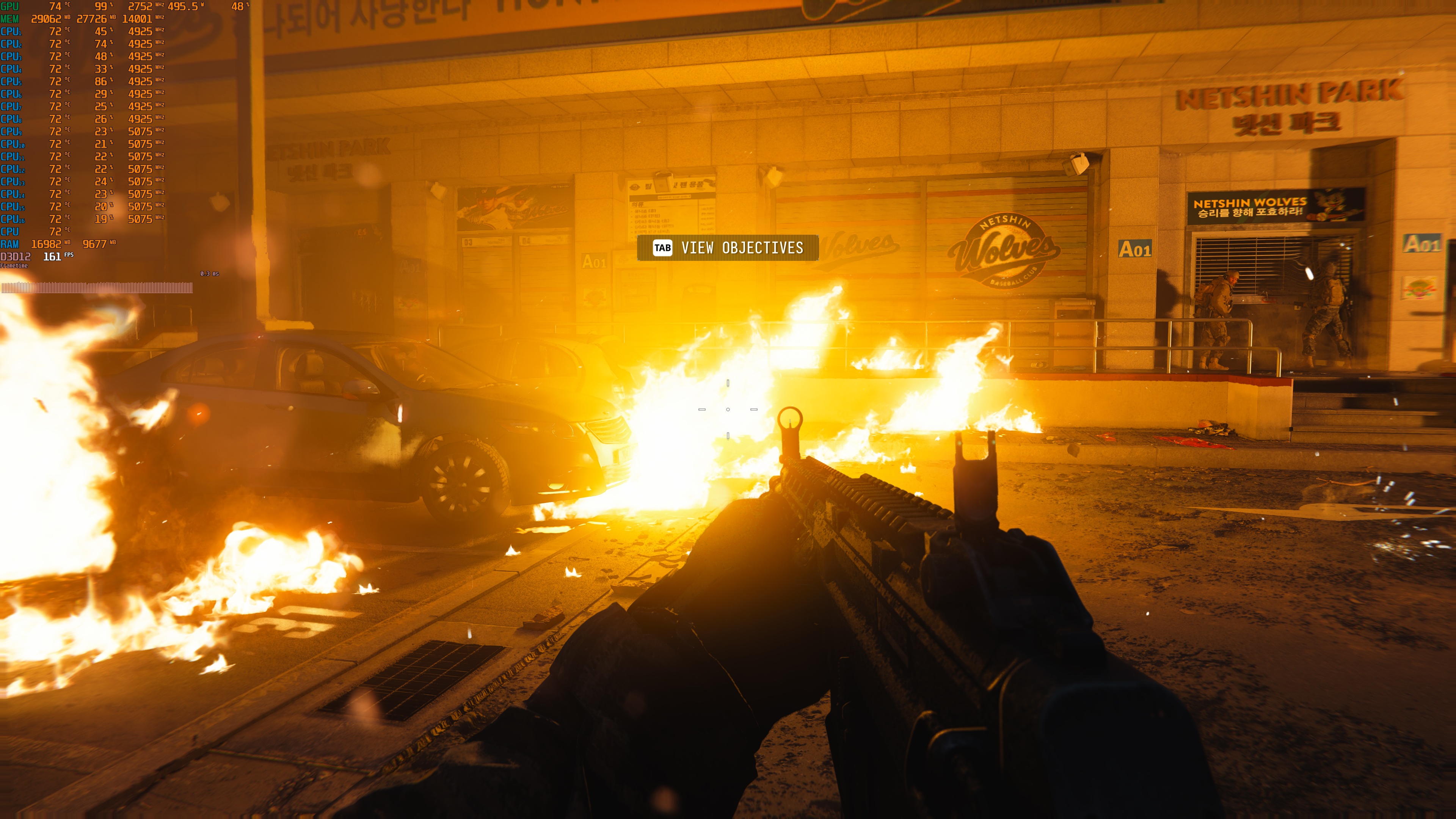
Call of Duty: Modern Warfare 4 has an in-game benchmark tool, but it’s locked behind its Multiplayer Mode. So, for our benchmarks, I used this scene. This was the most demanding area I could find in the first 4 chapters, as it had a lot of NPCs and vehicles.
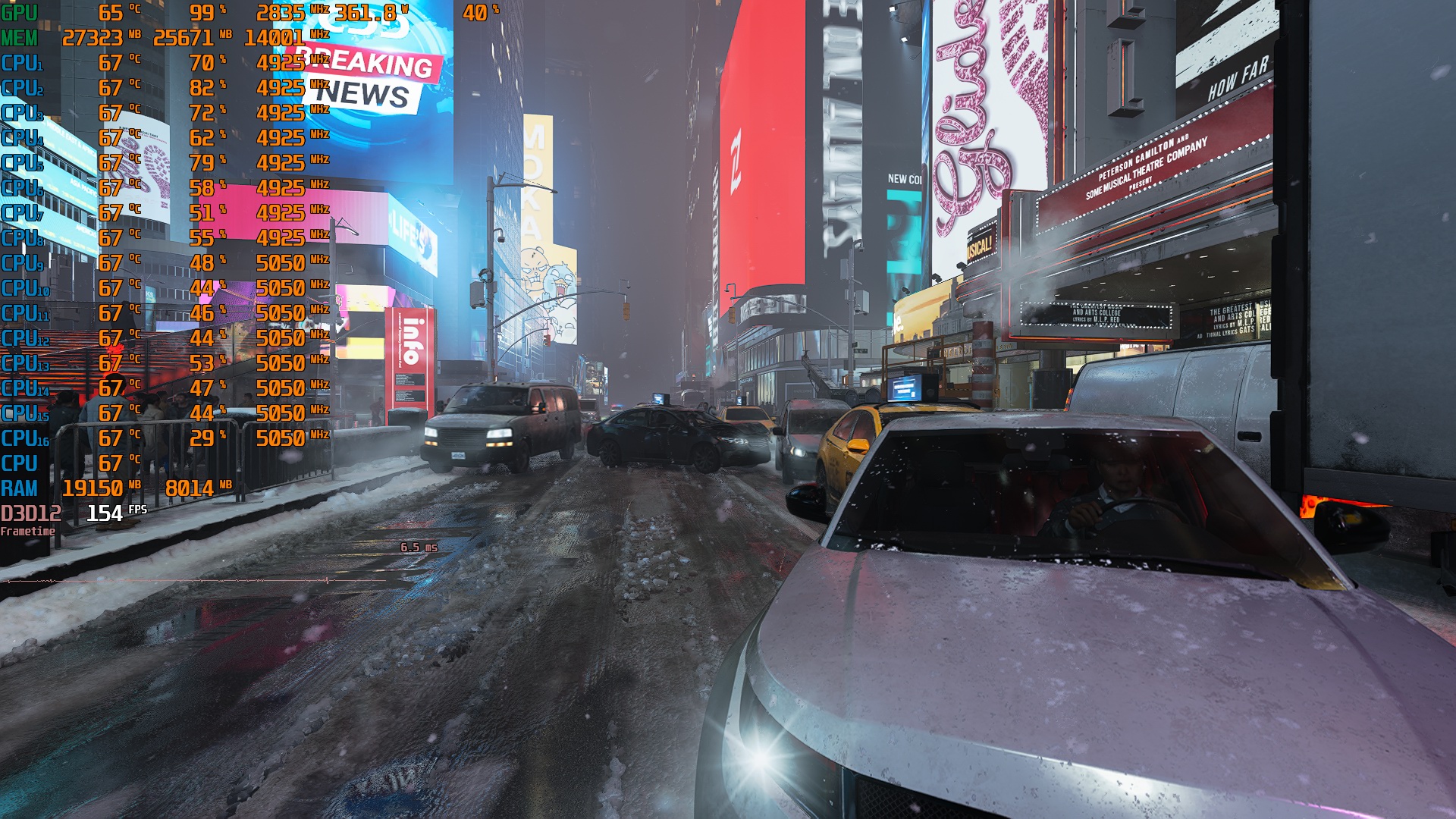
Most of our GPUs were able to provide frame rates higher than 60 FPS at all times at both 1080p and 1440p on Extreme Settings without RT. Like the previous COD games, COD: MW4 runs much faster on AMD’s GPUs. The AMD Radeon RX 9070XT and the RX 7900XTX were able to beat the NVIDIA RTX 5080. The AMD Radeon RX 6900XT was also able to beat the NVIDIA RTX 3080.
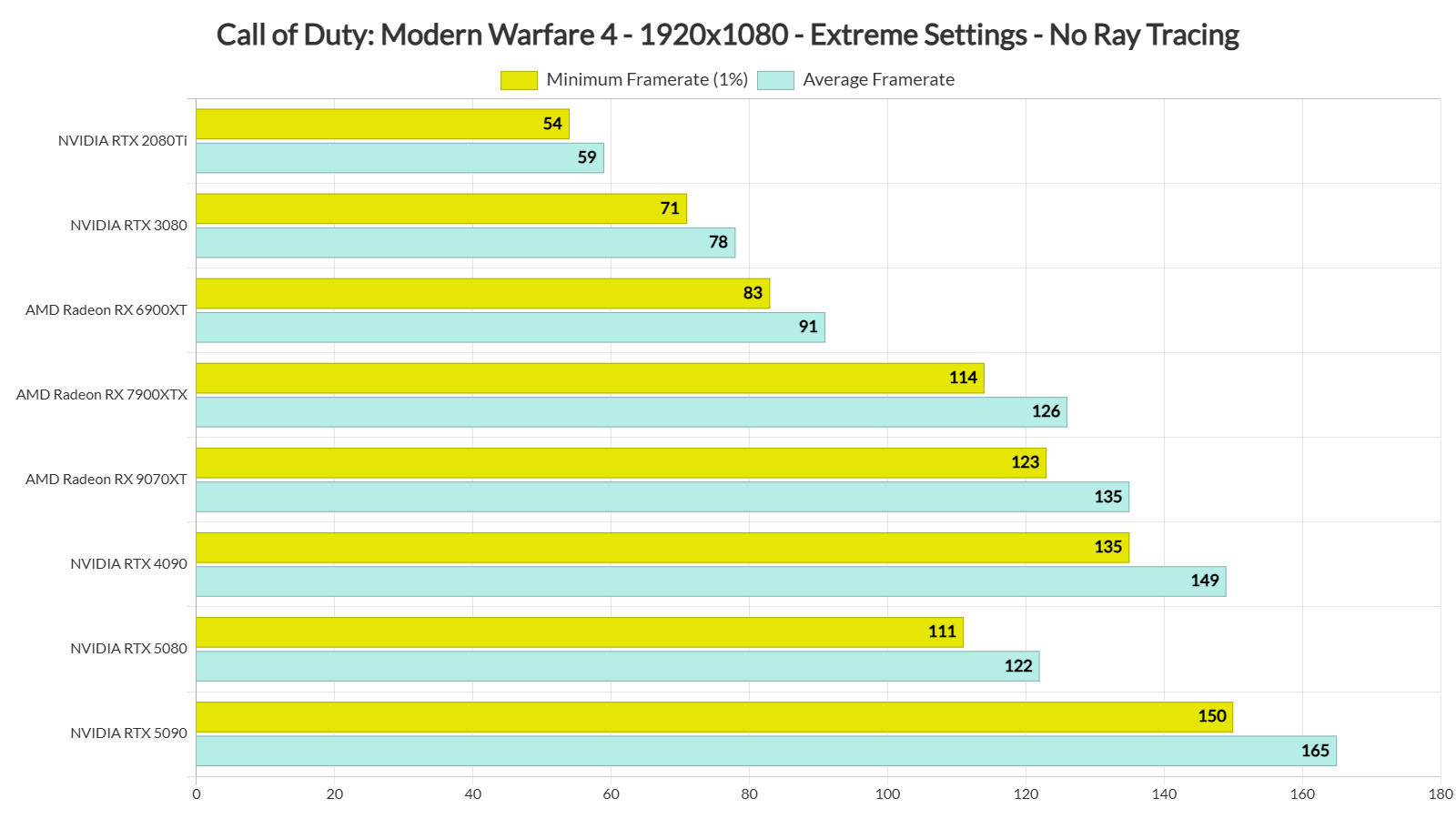
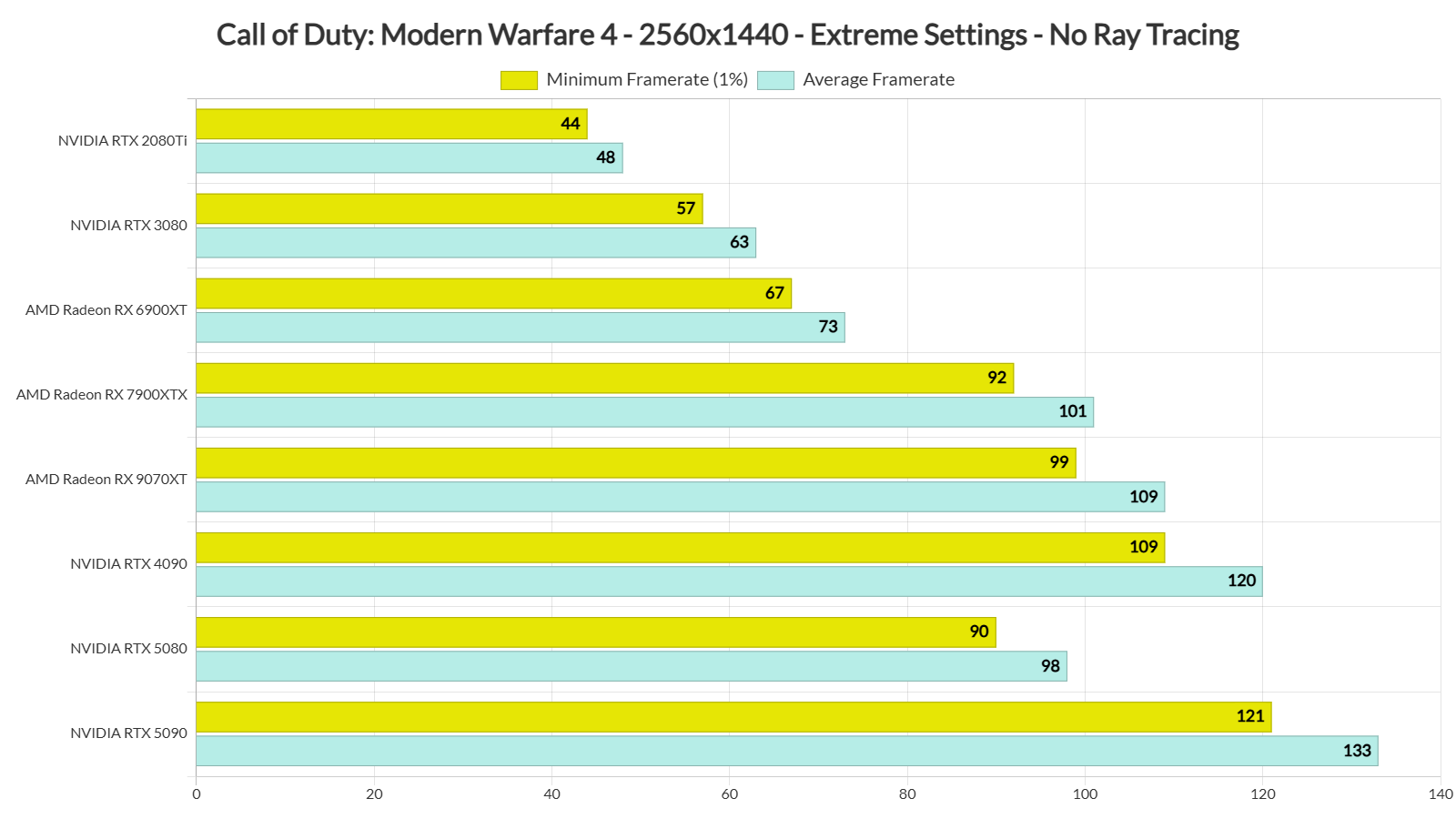
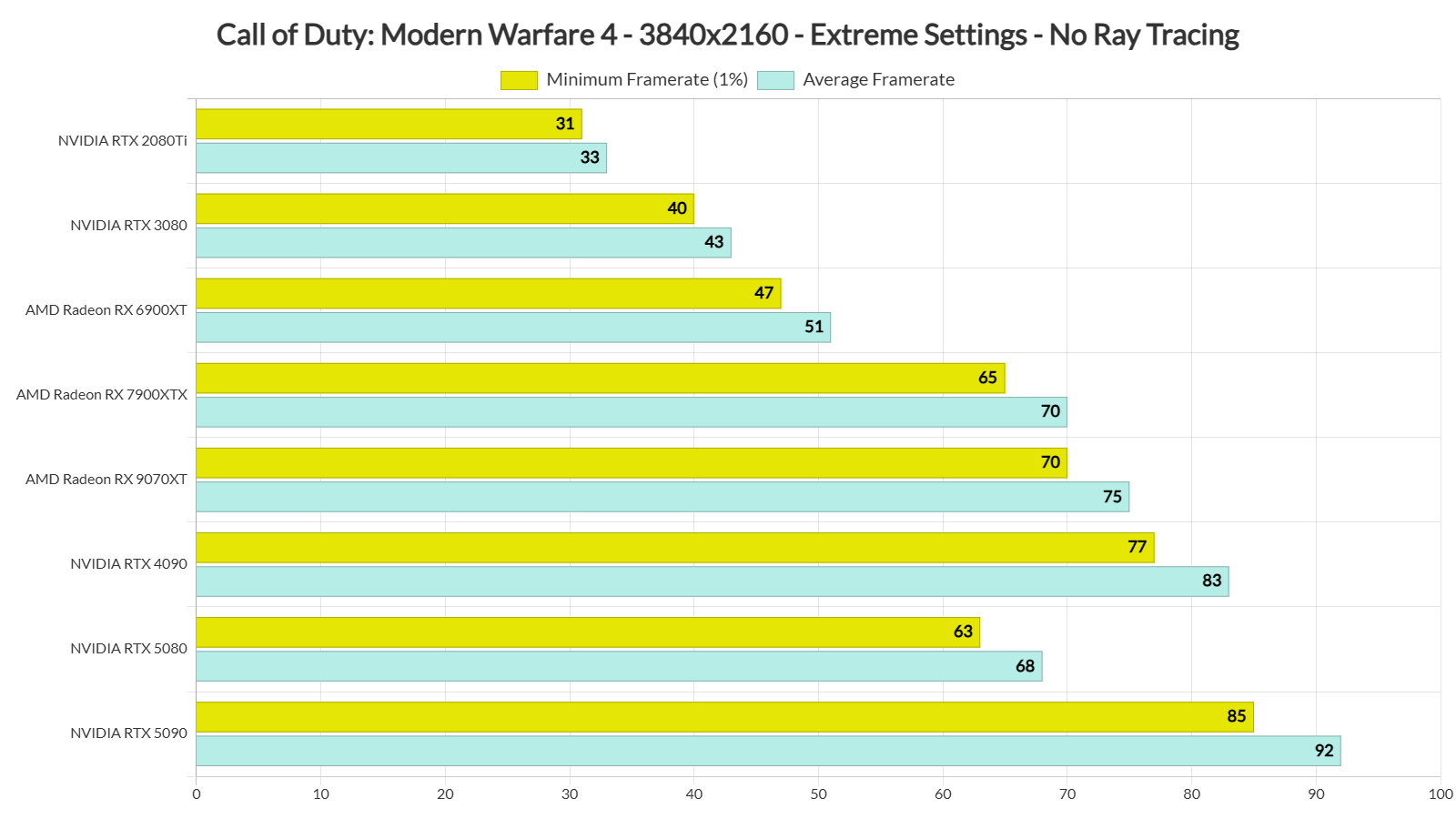
Our top five GPUs were able to provide a constant 60 FPS experience at Native 4K on Extreme Settings. So, rest assured that this new COD game will run great on a wide range of GPUs.
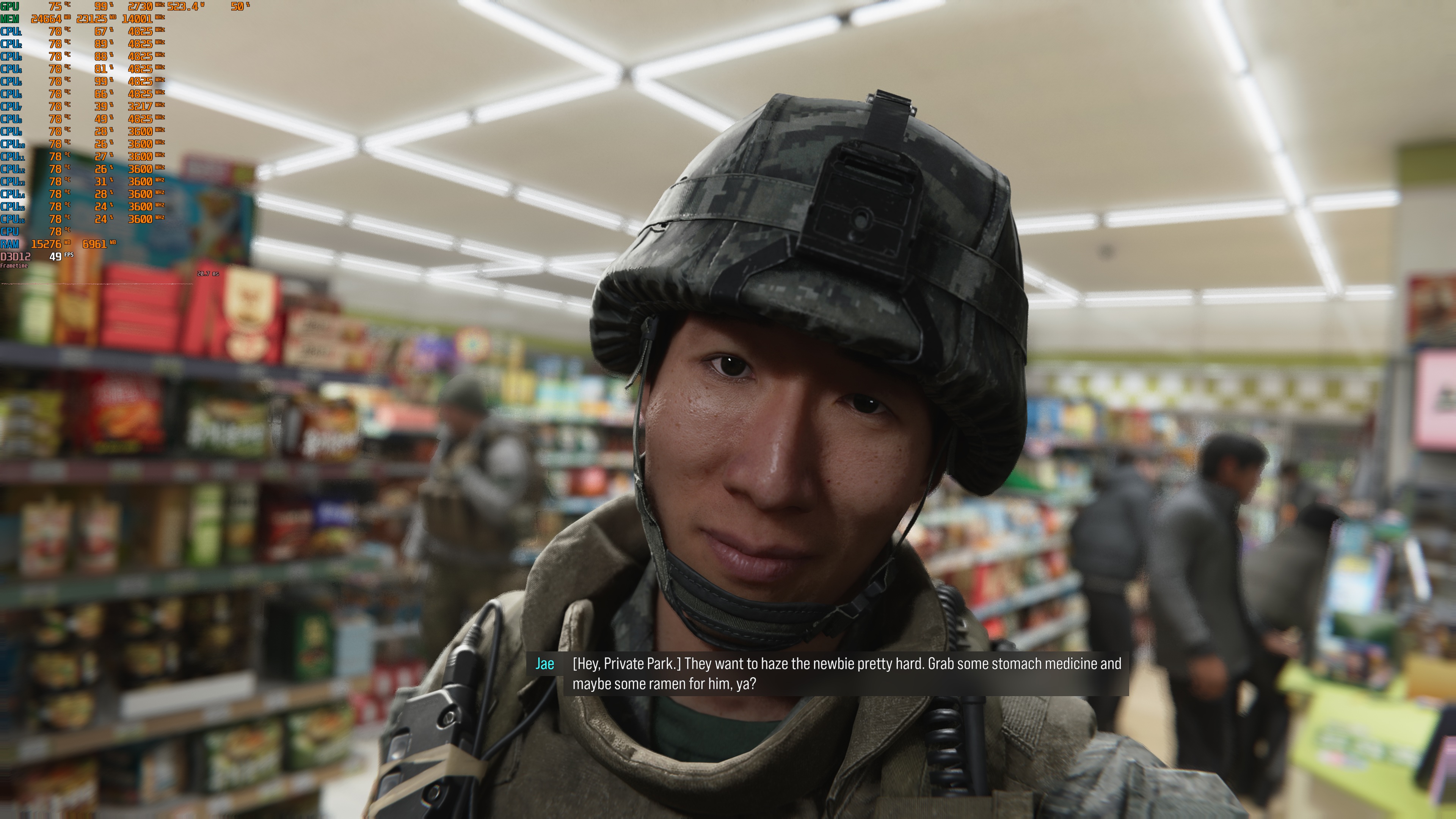
Graphics-wise, Call of Duty: Modern Warfare 4 looks spectacular. Contrary to the previous COD games, which were underwhelming when it came to their graphics, Modern Warfare 4 looks amazing. My only complaint is with the game’s faces. During certain lighting conditions, they can look a bit fake, plastic, and soft. For the most part, they look fine. But right now, I’m spoiled by what I’ve been experiencing in other games with DLSS 5. So, I’m curious to see if I’ll be able to fix this with a DLSS 5 Mod.
Before closing, I should note that Call of Duty: Modern Warfare 4 suffers from traversal stutters. During specific areas in the campaign, the game loads its next data and you will get stutters, especially if you use a weaker CPU or if you game at high frame rates. They are not as bad as those we’ve seen in Oblivion Remastered. Still, most of you will be able to notice them.
All in all, Call of Duty: Modern Warfare 4 runs great on PC. It has lots of graphics settings to tweak. It also runs well on mid-range GPUs, even at native 4K.
Sadly, Beenox made some poor choices with Ray Tracing. In my opinion, it’s inexcusable to disable DLSS and FSR when enabling Ray Tracing. It’s also inexcusable to force Variable Rate Shading when using DLSS, FSR, XeSS, or Ray Tracing. Players should be free to choose the settings they want. The game is also missing NVIDIA Ray Reconstruction. So, these are the things I hope the devs will address via future patches!



John is the founder and Editor in Chief at DSOGaming. He is a PC gaming fan and highly supports the modding and indie communities. Before creating DSOGaming, John worked on numerous gaming websites. While he is a die-hard PC gamer, his gaming roots can be found on consoles. John loved – and still does – the 16-bit consoles, and considers SNES to be one of the best consoles. Still, the PC platform won him over consoles. That was mainly due to 3DFX and its iconic dedicated 3D accelerator graphics card, Voodoo 2. John has also written a higher degree thesis on the “The Evolution of PC graphics cards.”
Contact: Email